

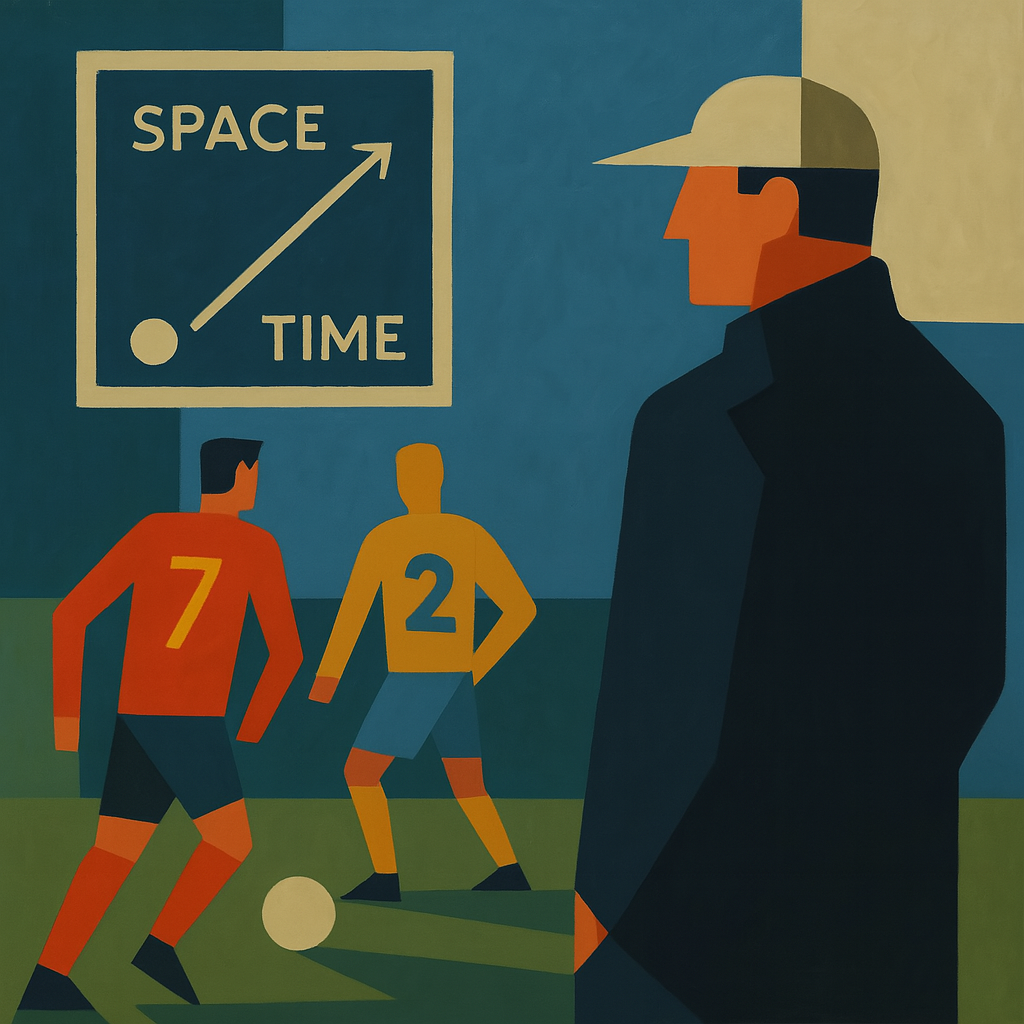
Soccer is a fast game, but the smartest teams know it’s not just about speed. It’s about using space and time wisely.
When defending, the goal is simple: close down space and limit your opponent’s time on the ball. That means staying compact, staying connected, and forcing the other team into tough decisions. You want to make it uncomfortable for them. Press smartly, protect the middle, and don’t let them break lines easily.
When attacking, it flips. Now you want to create space and give your teammates time. Spread the field, play quickly, and move off the ball with purpose. Timing becomes everything.
Think about it like this: good attacking teams stretch the field, switching play and pulling defenders side to side. Defenders, in turn, try to stay tight and organized. That leaves certain spaces open, often out wide or in the pockets between lines.
As the ball moves upfield, the picture changes quickly. Once you get into the final third, you’ll usually see one of three things happen:
- The team loses possession.
- They reset and keep the ball.
- They catch the defense off guard, connect at the right moment, and score.
That third one is what we all want. And it only happens when space, time, and timing come together.
Why Timing Matters So Much
The best moments in soccer happen when the timing is just right. A well-timed run into space. A pass delivered at the perfect moment. A defender stepping in just before the attacker can turn.
If the timing is even slightly off, the chance is gone. But when it’s right, when the runner and passer read the same moment, that’s when you get those brilliant goals that seem effortless.
You can’t force it. You have to feel it. That comes from repetition, awareness, and trust between teammates.
Space and time are always there on the field. The question is whether your team knows how to find them and what to do when they do.
 Tarek D - Soccer, Life, Art